
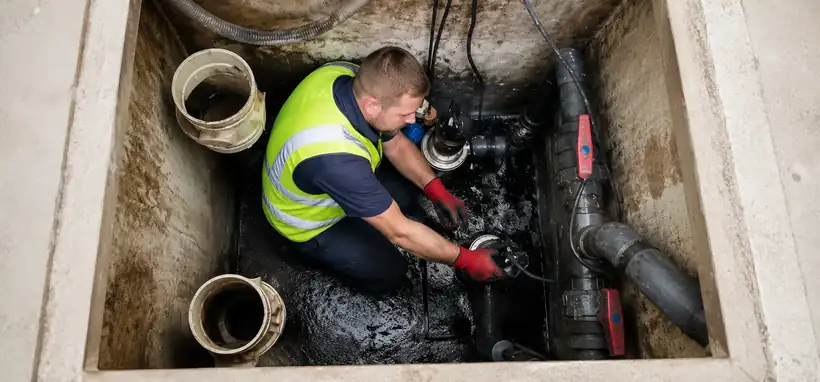
Every commercial kitchen in Dubai has a grease trap, and how well it is maintained has a direct effect on the kitchen running smoothly and passing inspection. Here is what it does and how often it needs cleaning.
What a grease trap does
A grease trap, or interceptor, sits between the kitchen sinks and the drainage system. As waste water passes through, fats, oils and grease float to the top and food solids sink to the bottom, so that mostly clean water flows on to the drains. It only works while it has room to separate that waste. Once it fills, grease carries straight into the drainage and causes blockages.
Why it needs regular cleaning
- A full trap lets grease into the drains, causing backups and slow drainage
- Grease build up creates bad odours in the kitchen
- It attracts pests and becomes a hygiene risk
- Dubai Municipality expects kitchens to maintain and empty their traps
- Neglect can put you at risk during an inspection
How often should a grease trap be cleaned?
It depends on the size of the trap and how much grease your kitchen produces. A common industry guide is the one quarter rule: clean the trap once fats and solids reach about a quarter of its depth. In practice, many busy kitchens clean monthly, and quieter ones quarterly. The only way to set the right interval is to look at your trap and your volumes.
Compliance in Dubai
Kitchens in Dubai are expected to maintain their grease traps and to dispose of the collected waste responsibly, keeping records that can be shown at inspection. A good grease trap service handles the cleaning, the disposal and the paperwork together, so you stay compliant without extra effort.
What happens if you neglect it
A neglected trap overflows grease into the drainage, which leads to blocked kitchen lines, backups during service, odours and pests. Clearing that emergency, during trading hours, costs far more than the scheduled cleaning would have, and a failed inspection is more costly still. Regular cleaning is simply the cheaper path.
- A grease trap separates fats and solids from waste water, and only works while it has room.
- A common guide is to clean once fats and solids reach a quarter of the trap depth.
- Busy kitchens often clean monthly, quieter ones quarterly.
- Dubai kitchens are expected to maintain traps, dispose of waste responsibly and keep records.
Grease trap due for a clean?
Free quote before we start. Same day service across Dubai.
Frequently asked questions
How often should a restaurant grease trap be cleaned?
A common guide is to clean once fats and solids reach about a quarter of the trap depth, which for busy kitchens is often monthly and for quieter ones quarterly. The right interval depends on the trap size and grease volume.
What happens if a grease trap is not cleaned?
It overflows grease into the drains, causing blockages, slow drainage and odours, attracts pests, and can put the kitchen at risk during a Municipality inspection. Regular cleaning prevents all of it.